Gas Line Installation
Pool Heater Gas Lines for New Construction: A Builder's Sizing and Planning Guide
October 26, 2026By Gas Pros Inc. · FL LP Gas License No. 33846
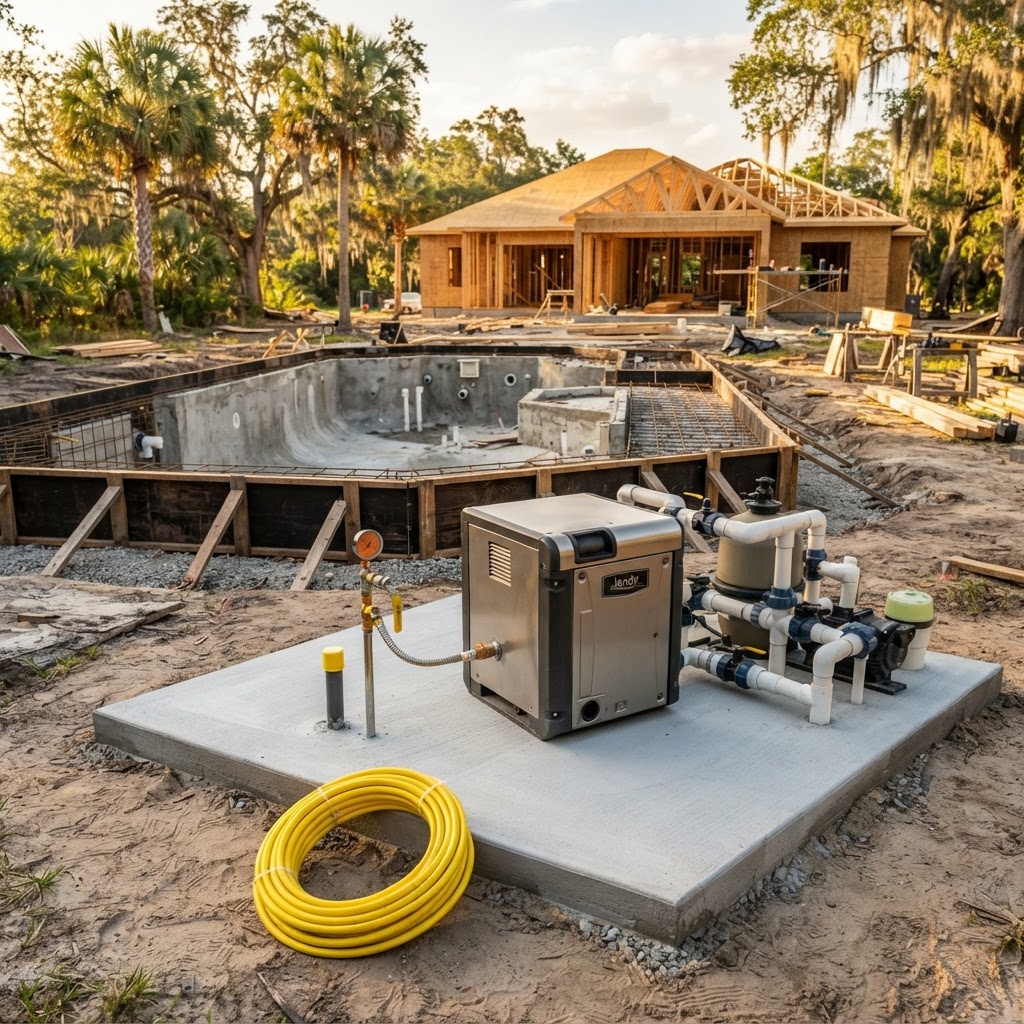
Pool heaters are the biggest gas appliance on most residential lots, so the line belongs in the rough, not a retrofit. New-construction guide for Tampa Bay builders: BTU load and branch sizing (3/4-inch to 1-1/4-inch), underground PE pipe with tracer wire and deck sleeves, Hillsborough County pressure-test and inspection sequencing, FDACS LP licensing, and the spec-sheet stub that turns equipment-pad rough-ins into upgrade sales.
<p><strong>Direct Answer:</strong> Planning pool heater gas lines during new construction means adding the heater to the home's combined BTU load at design, landing a 3/4-inch to 1-1/4-inch branch line (sized from Florida Building Code fuel gas tables against developed length), and running the underground portion in yellow PE pipe with tracer wire before the pool deck pours. For Hillsborough County builders, that translates to a pressure-tested, county-approved underground rough while the trench is open, a capped stub at the equipment pad, and a trim-out after the pool contractor sets the heater. A pad stub added at rough-in costs a builder pennies compared with coring a finished deck later, and "gas stubbed for future heater" is a spec-sheet line that sells. For builder-focused gas planning across Tampa Bay, contact <a href="https://gasprosinc.com">Gas Pros Inc</a> at (813) 425-3565.</p>
<h2>1. Why Pool Heater Lines Belong in the Rough, Not the Retrofit</h2>
<p>Most pools in Tampa Bay custom and production builds go in after dry-in, but the gas line that feeds the heater cannot wait. Once the pool deck is formed and poured, the only ways to add or upsize a gas line are trenching through fresh decorative concrete or tunneling under it, both of which cost more than the pipe itself and wreck a finish schedule. Builders who fold the pool heater into the mechanical design at permit stage get one underground trench that carries the line out to the future equipment pad, inspected and pressure-tested while the county inspector is already approving the rest of the underground gas work.</p>
<p>There is also a sizing trap to avoid: a pool heater is the single biggest gas appliance on most residential lots. Roughing a half-inch branch "because it's just a pool" guarantees a callback when a 400,000 BTU heater starves every time the spa pump heater and range run together. Plan the load, size the pipe, done once.</p>
<h2>2. Pool Heater Gas Line Sizing Table for Builders</h2>
<p>Natural gas sizing comes from the tables in the Florida Building Code, Fuel Gas (IFGC-based), plotted against developed length: every fitting and bend counts as added footage. The figures below are the branch sizes we typically land for residential work; your gas sub should confirm against code tables for each run.</p>
<table style="width: 100%; border-collapse: collapse; margin: 20px 0; font-size: 14px; text-align: left;">
<thead>
<tr style="background-color: #1b365d; color: #ffffff;">
<th style="padding: 10px; border: 1px solid #cccccc;">Heater Input (Natural Gas)</th>
<th style="padding: 10px; border: 1px solid #cccccc;">Approx. Demand</th>
<th style="padding: 10px; border: 1px solid #cccccc;">Typical Branch Up to ~40 ft Run</th>
<th style="padding: 10px; border: 1px solid #cccccc;">Longer Runs / Heater Plus Other Loads</th>
</tr>
</thead>
<tbody>
<tr>
<td style="padding: 10px; border: 1px solid #cccccc; font-weight: bold;">250,000 BTU/hr</td>
<td style="padding: 10px; border: 1px solid #cccccc;">~250 CFH</td>
<td style="padding: 10px; border: 1px solid #cccccc;">3/4-inch</td>
<td style="padding: 10px; border: 1px solid #cccccc;">1-inch</td>
</tr>
<tr style="background-color: #f9f9f9;">
<td style="padding: 10px; border: 1px solid #cccccc; font-weight: bold;">300,000–350,000 BTU/hr</td>
<td style="padding: 10px; border: 1px solid #cccccc;">~300–350 CFH</td>
<td style="padding: 10px; border: 1px solid #cccccc;">1-inch</td>
<td style="padding: 10px; border: 1px solid #cccccc;">1-inch to 1-1/4-inch</td>
</tr>
<tr>
<td style="padding: 10px; border: 1px solid #cccccc; font-weight: bold;">400,000 BTU/hr (most common upgrade size)</td>
<td style="padding: 10px; border: 1px solid #cccccc;">~400 CFH</td>
<td style="padding: 10px; border: 1px solid #cccccc;">1-inch</td>
<td style="padding: 10px; border: 1px solid #cccccc;">1-1/4-inch</td>
</tr>
</tbody>
</table>
<p>Two builder-side notes that come up on every plan review. First, the heater load stacks with the range, dryer, tankless water heaters, fireplace, and generator if you are running packages; if the total approaches the meter's capacity, the utility (TECO in most of Hillsborough County) has to upsize the meter and regulator, which is a scheduling item, not a same-week item. Second, for propane builds in areas like Wimauma, Lithia, and Sun City Center, the same heater on LP draws fewer cubic feet but the tank and first-stage regulator have to be sized for it, and tank placement has to clear the setback rules in Chapter 527, Florida Statutes.</p>
<h2>3. Underground Pipe, Tracer Wire, and Deck Protection</h2>
<p>The out-to-the-pad run follows the same Florida rules as any buried gas line: yellow medium-density polyethylene (PE) pipe rated for fuel gas, minimum 18-inch cover in soil (12 inches under at least 4 inches of reinforced concrete), and a 14-gauge insulated tracer wire taped to the pipe so a locator can find it before the landscaper's trencher does. Anodeless risers handle the below-grade transition to steel at each end, and the riser passes through a protective PVC sleeve where it penetrates the pool deck so deck settling never loads the pipe or its fittings.</p>
<p>At the pad end, spec what the pool contractor needs: a capped stub at finished-pad height, a manual shut-off valve within easy reach of the heater location, and a sediment trap (drip leg) at the drop so scale and pipe dope never reach the heater's gas valve. Confirm service clearances with the heater model, typically around 24 inches of front access, before the pad gets crowded with pumps and filters.</p>
<h2>4. Rough-In Scheduling and Hillsborough County Inspections</h2>
<p>The sequencing that keeps pools from stalling a schedule:</p>
<ol>
<li><strong>Design and permit stage:</strong> heater BTU input on the mechanical plan, branch sized, meter or tank capacity checked.</li>
<li><strong>Underground phase:</strong> trench to the equipment pad with the other utilities, lay PE with tracer wire and sleeve at the deck crossing, cap and tag the stub.</li>
<li><strong>Pressure test and county inspection:</strong> the underground assembly holds 10–15 psi on a gauge, and Hillsborough County Development Services signs off the rough before any concrete covers it.</li>
<li><strong>Pool construction:</strong> the pool contractor sets the equipment pad; your gas sub coordinates the trim-out after the heater is set, including the sediment trap, shut-off, and a final leak and flame check at start-up.</li>
</ol>
<p>One coordination note builders appreciate: the electrician's equipotential bonding around a pool picks up metallic parts near the water, and the gas riser's bond connection is a code item the pool electrician and gas sub both assume the other is handling. Put it on your trade checklist and the final inspection passes without a sticker-chase.</p>
<h2>5. Licensing: Who Can Legally Run the Line</h2>
<p>Natural gas piping in Florida runs under the Florida Building Code with county permitting and inspection, while propane work is regulated by the Florida Department of Agriculture and Consumer Services (FDACS) under Chapter 527, F.S., through LP gas dealer and installer licenses with a qualified master on staff. Hillsborough County inspectors verify the pressure test regardless of fuel. When you line up your gas trade, ask which license covers the fuel you're plumbing: a contractor who can pull the permit for one fuel but cannot legally touch the other is the wrong trade for a TECO-and-LP community mix.</p>
<h2>6. The Spec-Sheet Angle: Turn a Cheap Stub into an Upgrade Sale</h2>
<p>Production and semi-custom builders have learned this the profitable way: run the heater stub in every pool home regardless of whether the buyer takes the heater. The rough-in cost is a short PE run and one inspection visit. Then "gas line roughed to equipment pad, heater ready" becomes either a closing-time upgrade (heater, spa pak, remote fire feature, all fed from the same stub), or a post-closing sale for you instead of a trenching job for whoever the buyer calls later.</p>
<p>It stacks with the other gas packages buyers ask about: fireplace, standby generator, outdoor kitchen, and pool heater lines share one coordination window, one inspection trip, and one mobilization. We plan them together with builders so option conversions don't turn into re-trenching, and the same stub logic feeds the whole package list.</p>
<h2>7. Buyer Appeal: Why Heat Sells in Tampa Bay</h2>
<p>Tampa Bay pools sell a backyard; heated pools sell year-round use. When a heater stub is already in the ground, the sales team can offer "heater-ready" at the design center, the pool contractor can complete the hookup, and the marketing copy writes itself. The retro scenario, a chunk of a brand-new deck broken out because the line wasn't stubbed, does the opposite.</p>
<h2>Frequently Asked Questions</h2>
<h3>What size gas line does a pool heater need?</h3>
<p>Most residential pool heaters in the 250,000 to 400,000 BTU/hr range need a 3/4-inch to 1-inch branch for short runs and up to 1-1/4-inch for longer runs or stacked appliance loads. The final size comes from the Florida Building Code Fuel Gas sizing tables against the developed length of the run.</p>
<h3>How deep does an underground pool heater gas line need to be?</h3>
<p>PE gas pipe needs a minimum of 18 inches of cover in soil, or 12 inches when protected under at least 4 inches of reinforced concrete, with tracer wire laid along the pipe and anodeless risers at each end.</p>
<h3>Does a pool heater gas line need a permit in Hillsborough County?</h3>
<p>Yes. The underground rough is pressure-tested and inspected by Hillsborough County before the deck pour, and the trim-out is verified at final. A licensed gas contractor pulls the permit and schedules the inspections.</p>
<h3>Can I just stub a gas line for a heater the buyer might add later?</h3>
<p>Yes, and it's the smart move for pool homes. A capped, inspected stub at the equipment pad costs a fraction of retrofit trenching through a finished deck and lets the heater, spa, or fire feature be added cleanly.</p>
<h2>Get Pool Heater Gas Lines on Your Trade List</h2>
<p>Gas Pros Inc plans and installs pool heater gas lines for custom and production builders across Tampa Bay, from Riverview and Apollo Beach to Lithia, Wimauma, and Sun City Center. We handle natural gas and propane systems, FDACS-licensed LP work, Hillsborough County inspections, and combined-package rough-ins that cover fireplace, generator, and outdoor kitchen lines in one mobilization. Submit your plans for bid at <a href="https://gasprosinc.com">gasprosinc.com</a> or call our builder team at (813) 425-3565.</p>